


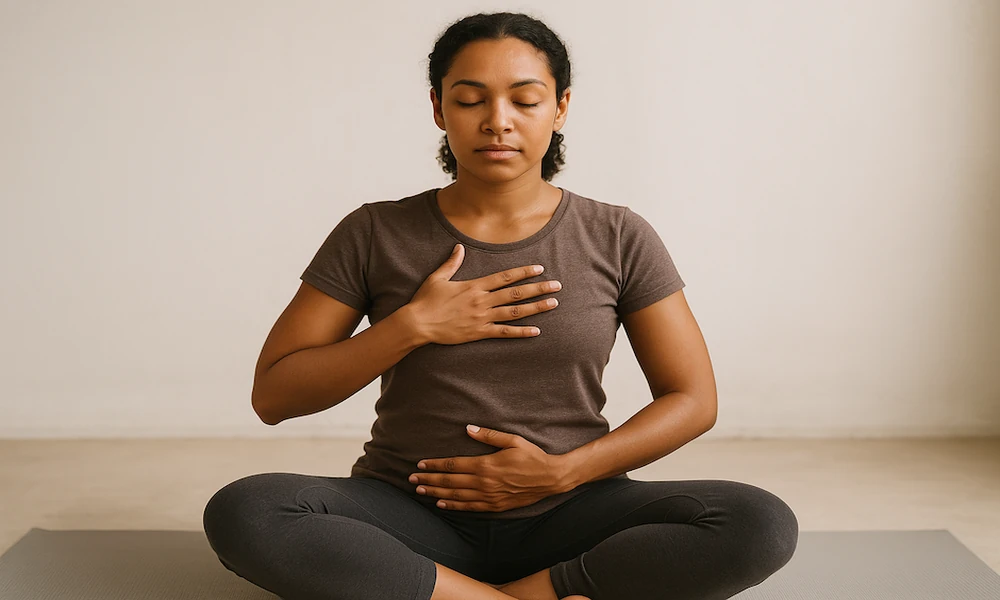
Breathing happens automatically, so it is easy to forget how powerful it can be. When we are stressed, breathing becomes quick and shallow, and the muscles of the neck, shoulders and jaw tighten. By slowing the breath on purpose, you can send a calming signal to the nervous system and help tense muscles let go. These breathing exercises for stress are free and take only a few minutes.
How Breathing Affects Stress
The body has two main modes: the fight-or-flight response and the rest-and-digest state. Fast, chest-based breathing is linked to the first, keeping the heart rate up and muscles ready for action. Slow, deep breathing activates the parasympathetic nervous system, which lowers heart rate, reduces blood pressure and helps muscles relax. Practised regularly, these techniques can make it easier to stay calm under pressure.
1. Diaphragmatic Breathing
Also known as belly breathing, diaphragmatic breathing uses the large muscle beneath the lungs rather than the chest and shoulders.
- Sit or lie comfortably with one hand on your chest and one on your stomach.
- Breathe in slowly through your nose so your stomach rises while your chest stays still.
- Exhale gently through pursed lips, feeling your stomach fall.
- Continue for five to ten minutes.
2. Box Breathing
Used by athletes and emergency workers, box breathing is simple to remember. Inhale for a count of four, hold for four, exhale for four and hold for four again, then repeat. Four rounds are often enough to steady the mind before a stressful meeting or task.
3. 4-7-8 Breathing
This pattern is especially helpful at bedtime. Breathe in through the nose for four counts, hold for seven, and breathe out slowly through the mouth for eight. The long exhale encourages deep relaxation. Start with four cycles and build up gradually.
4. Breathing With Progressive Muscle Relaxation
Combine breathing with gentle tensing and releasing of muscle groups. As you inhale, tighten a muscle group, such as your shoulders, for about five seconds. As you exhale, release completely and notice the difference. Work from your feet up to your face. This helps you recognise where you hold tension and teaches the body to let go.
Tips for Getting Started
- Practise at the same time each day, such as on waking or before sleep.
- Find a quiet place at first; with experience you can use these techniques anywhere.
- Do not force the breath. If you feel light-headed, return to normal breathing.
- Be patient, because benefits grow with regular practice.
Pairing Breathing With Other Relaxation
Breathing exercises work well alongside other ways to unwind, such as warm baths, gentle yoga, walking outdoors and massage. A 출장마사지 session at home creates a calm space to practise slow breathing while a therapist works through tight shoulders and back muscles, doubling the relaxation effect.
When to Seek Help
Breathing techniques are a helpful tool, but they are not a replacement for professional care. If stress or anxiety feels overwhelming or affects daily life, speak to a doctor or mental health professional.
A few mindful breaths can change how your whole body feels. Start today, and make calm a daily habit.